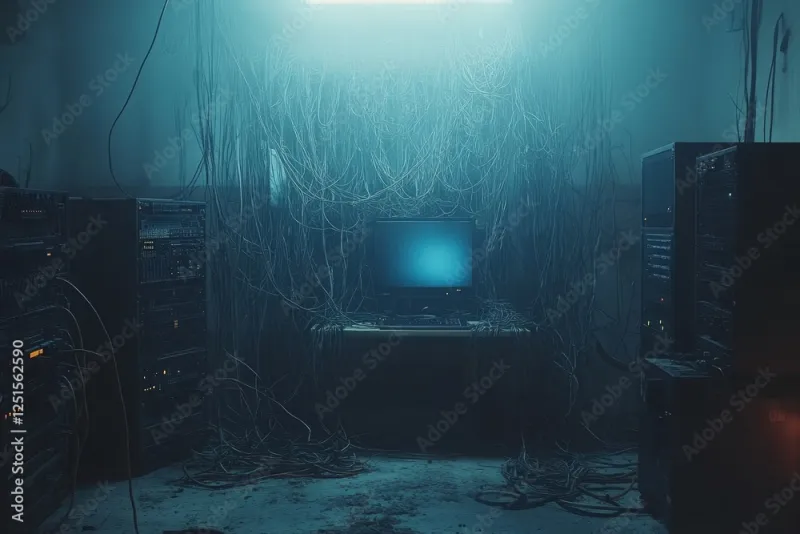
Beautiful Broken: How Corrupted Data Became the Most Honest Art Form Online
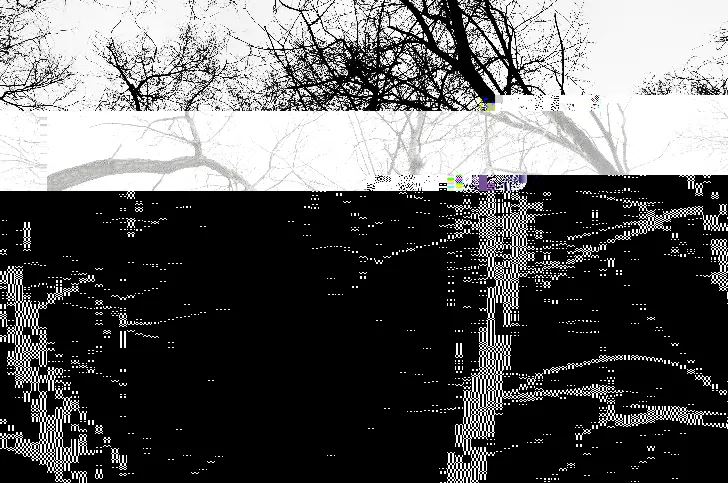
Photo: Lucas Rafael Tenllado Gil, CC BY-SA 4.0, via Wikimedia Commons
There's a specific kind of beauty in watching something fall apart. A JPEG compressed past the point of recognition. A video file that stutters into abstract color blocks. A font that renders as a cascade of Unicode nonsense. Most people instinctively hit refresh or restart. A growing community of artists hit save.
This is glitch art — and if you think it's a niche internet thing, you haven't been paying attention.
The Mistake That Started a Movement
The roots of intentional digital corruption go back further than most people realize. In the early 1990s, artists working in what became known as net.art — a loose, international collective operating mostly through email lists and early websites — started treating the internet itself as a medium rather than a delivery mechanism. They weren't making art for the web; they were making art out of the web's own weirdness.
One of the earliest documented examples is Jodi.org, launched in 1995 by Joan Heemskerk and Dirk Paesmans. The site looked, on first visit, like a catastrophic server failure. Broken HTML, cascading ASCII symbols, pages that seemed to actively resist being read. It wasn't broken. It was a statement — a deliberate deconstruction of the visual language users were being trained to trust.
At the time, most people bounced immediately. The ones who stayed, who poked around, who started asking why — those people became the first generation of glitch art practitioners.
Corrupting the File on Purpose
The technical methods that define glitch aesthetics are genuinely varied, and part of what makes the community interesting is the ongoing debate over what actually counts. Databending is probably the most foundational technique: opening an image or audio file in software that wasn't designed for it — importing a JPEG into Audacity, say, and then applying audio effects — and saving the result. The file comes back transformed in ways that are partially predictable, partially not.
Then there's circuit bending, which applies the same logic to hardware: physically modifying vintage electronics like Game Boys or Casio keyboards to introduce unpredictable signal interference. There's pixel sorting, where algorithms rearrange pixels based on brightness or color values, creating those characteristic streaking, melting visual effects you've definitely seen on Tumblr or Instagram without necessarily knowing the name for them.
And there's the deliberately low-fi end of things — artists who work with VHS degradation, analog signal noise, scan-line artifacts — chasing the specific texture of obsolete technology because that texture carries cultural weight. It means something to look degraded in that particular way.
From the Underground to the Gallery Wall
For a long time, glitch art lived almost entirely online. Tumblr was a significant incubator through the late 2000s and early 2010s, giving artists a platform where the aesthetic could spread organically without institutional gatekeeping. Communities formed around specific techniques, specific tools, specific vibes.
The mainstream crossover happened gradually, then suddenly. Rosa Menkman, a Dutch media theorist and artist who literally wrote the book on glitch studies (The Glitch Moment(um), 2011), helped give the movement intellectual scaffolding that made it legible to academic and gallery contexts. Her work doesn't just look like glitch art — it argues, through visual means, that the error state is where the real information lives.
By the mid-2010s, the aesthetic had migrated into fashion, music video direction, and graphic design. Kanye West's Yeezus era visual identity leaned hard into digital fragmentation. Supreme released pieces with corrupted-image graphics. Major labels started hiring directors who'd come up through the glitch community to give music videos that specific broken-transmission look.
The irony wasn't lost on anyone: an aesthetic born from rejecting polished digital surfaces was now being deployed to sell things.
The Philosophical Weight of the Error
Here's what makes glitch art more interesting than just a visual style: it carries a genuine argument.
When you deliberately corrupt an image, you're exposing the infrastructure underneath it. You're revealing that the smooth, seamless digital surfaces we interact with constantly are constructions — maintained fictions that require enormous computational effort to sustain. The glitch doesn't break the image. It tells the truth about what the image always was.
There's a reason this aesthetic resonated so hard in the post-2008 moment, and why it's had another surge during the social media era. We are surrounded by aggressively curated, filtered, optimized visual content. Everything is compressed into the most appealing version of itself. Glitch art functions as a kind of immune response — a visual reminder that the signal is never as clean as it looks.
Artists like Kim Asendorf, Sabato Visconti, and Takeshi Murata have each pushed this in different directions. Visconti's portrait photography, where human faces melt into cascading pixel artifacts, is particularly striking — there's something genuinely unsettling about watching a recognizable face dissolve into pure data, which is exactly the point.
Where It Lives Now
Glitch aesthetics in 2024 exist in a complicated place. The techniques have been so thoroughly absorbed into mainstream visual culture that the original transgressive charge has softened considerably. Instagram filters that simulate VHS degradation are built into apps that get downloaded by people who weren't alive when VHS existed. The error has been productized.
And yet the core community — the people actually databending files, actually circuit-bending hardware, actually engaging with the theoretical underpinnings of what error means in a digital context — remains active and genuinely weird in the best possible way. Platforms like Glitch Artists Collective on Facebook, the ongoing Transmediale festival in Berlin, and a scattered network of personal websites and Discord servers keep the practice alive and evolving.
AI-generated imagery has introduced a new wrinkle: the specific artifacts and errors that characterize AI image generation — the wrong number of fingers, the nonsense text, the uncanny valley faces — are already being deliberately incorporated into art that wants to say something about machine vision and its limits. The error, as always, tells you more than the clean output.
There's something almost optimistic about that. Every new technology brings new failure modes, and every new failure mode is raw material. The glitch aesthetic isn't tied to a specific tool or era — it's a disposition, a way of paying attention to what breaks and asking why.
Where the signal breaks, something new begins. We've been saying that around here for a while. Turns out, artists figured it out decades ago.