Cruelest Timing: Does Your Console Know Exactly When to Break You?
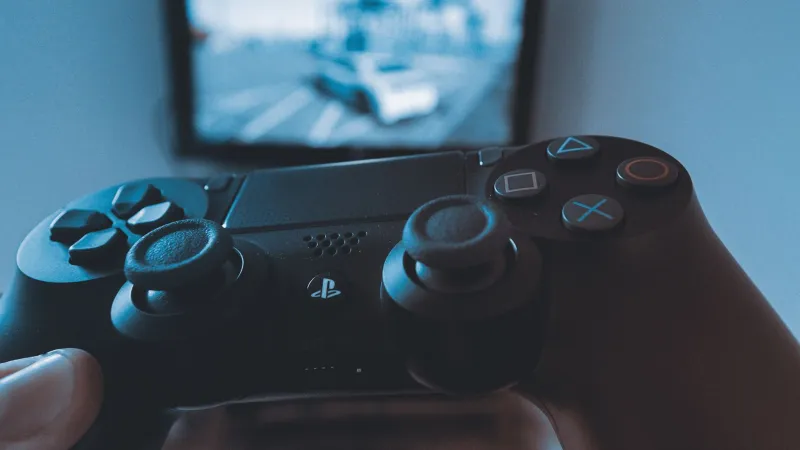
There's a specific kind of grief that only gamers understand. Not the grief of losing — losing is fine, losing is part of it — but the grief of the freeze. The moment right before the finish line where the screen locks up, the audio cuts to a single repeating tone, and your controller goes dead in your hands like a fish. You were right there. And then you weren't.
Ask around in any gaming community and the stories pile up fast. A Dark Souls player lands what should have been a killing blow on a boss they've been fighting for two hours, only to watch the frame rate crater into a slideshow at the exact moment of impact. A speedrunner's world-record attempt dies in a single-frame stutter during the final stretch. A kid in Ohio finally beats their older sibling at Mario Kart, only to have the game hitch at the finish line and hand the win to someone else entirely.
Coincidence? Almost certainly. But the timing is so consistently awful that it's hard not to wonder.
What's Actually Happening When Games Freeze
Let's start with the boring answer, because the boring answer is actually kind of fascinating.
Frame drops and game freezes don't happen in a vacuum — they happen when your hardware runs out of runway. Your console or PC is constantly juggling thousands of processes: rendering geometry, calculating physics, streaming audio, managing memory allocation, handling network packets if you're online. Most of the time it keeps all those plates spinning without you noticing. But certain moments in games are computationally expensive. Boss encounters. Explosions. Dense particle effects. Crowd simulations. The exact moments that feel most dramatic to you as a player are often the moments that demand the most from your hardware.
So here's the uncomfortable math: the moments most likely to stutter are the same moments most likely to matter. It's not that your console hates you. It's that your console is working hardest precisely when you need it to be invisible.
That's the technical explanation, and it's solid. But it doesn't fully account for what gamers actually report experiencing — which is something subtler and stranger than simple frame drops.
The Micro-Freeze Problem
Beyond full crashes and obvious slowdowns, there's a phenomenon that competitive players talk about in almost conspiratorial tones: the micro-stutter. A single dropped frame, maybe two. So brief that you can't consciously register it, but long enough to throw off the muscle memory you've spent hours building.
In a shooter, that's the difference between landing a headshot and hitting empty air. In a fighting game, it collapses the timing window for a parry to nothing. In a platformer, it turns a jump you've made a hundred times into a fall you don't understand.
The cruel part is that micro-stutters are almost impossible to verify after the fact. Your game's performance log might not even catch them. You're left with the sensation of having been cheated by something you can't prove existed. Which, if you've spent any time in gaming communities, you know produces a very specific flavor of rage.
Modern game engines have gotten better at smoothing these out — frame pacing algorithms, dynamic resolution scaling, adaptive sync technology — but they haven't eliminated them. And on older hardware, or in games that weren't optimized carefully, they remain a live threat.
Peak Vulnerability as a Technical Condition
Here's where things get genuinely weird.
Some researchers in human-computer interaction have started looking at the relationship between emotional arousal and perceived system performance. When you're deeply invested in an outcome — heart rate up, focus narrowed, hands gripping the controller harder than necessary — your perception of time and responsiveness shifts. Lag that you'd normally filter out becomes intolerable. Frame drops you'd never notice during a casual session feel catastrophic.
In other words: your emotional state changes how you experience your hardware's failures. You're not necessarily glitching more at critical moments. You're just feeling it more.
But that's not the whole story either. Because there's a real argument to be made that emotionally intense moments in games are also mechanically intense moments — moments where you're pressing more buttons, making faster inputs, demanding more from the system's input processing. A boss fight at 10% health isn't just psychologically different from the same boss at 80% health. It's physically different. You're playing differently. And that changes the load on your hardware in ways that are hard to predict.
The Algorithm Doesn't Care, and That's Somehow Worse
The most unsettling conclusion you can reach after going deep on this is not that your console is malicious. It's that the cruelty is structural.
Game developers build toward dramatic peaks. They design encounters to escalate — more enemies, more effects, more chaos — as you approach the climax. The hardware is then asked to render that escalation in real time, under conditions that were never perfectly optimized, on machines that are years old and running warm. The freeze isn't targeted at you. It's just the natural output of a system that was always going to buckle somewhere, and the somewhere it buckles is wherever the pressure is highest.
Which happens to be exactly where you needed it not to.
There's no algorithm tracking your heart rate and choosing its moment. There's no malicious intelligence waiting for you to get attached before pulling the rug. It's just physics and memory management and thermal throttling and the fundamental chaos of real-time rendering. The machine broke when the machine was most stressed, and you were most stressed at the same time, and the overlap felt personal because everything feels personal when you've been playing for six hours and your hands won't stop shaking.
So Why Does It Still Feel Like It Knew?
Because humans are pattern-recognition machines running on emotion. We find faces in static and conspiracies in coincidences and we build narratives around the moments that hurt us. A freeze at the beginning of a level is a minor annoyance. A freeze at the final second of a final attempt is a story you tell for years.
Survivorship bias does the rest. Nobody posts about the times their game ran perfectly through a critical moment. The lore of gaming glitches is built entirely from the worst cases, the most devastating timing, the cruelest possible outcomes. That's not a representative sample. That's just the part of the data that felt worth remembering.
But knowing that doesn't make it sting less. And it doesn't stop you from side-eyeing your console the next time it hesitates at exactly the wrong second.
The machine doesn't know when to break you. It just breaks. And you're the one who decided what the timing meant.