Everything You Almost Said: The Secret Life of Your Deleted Drafts
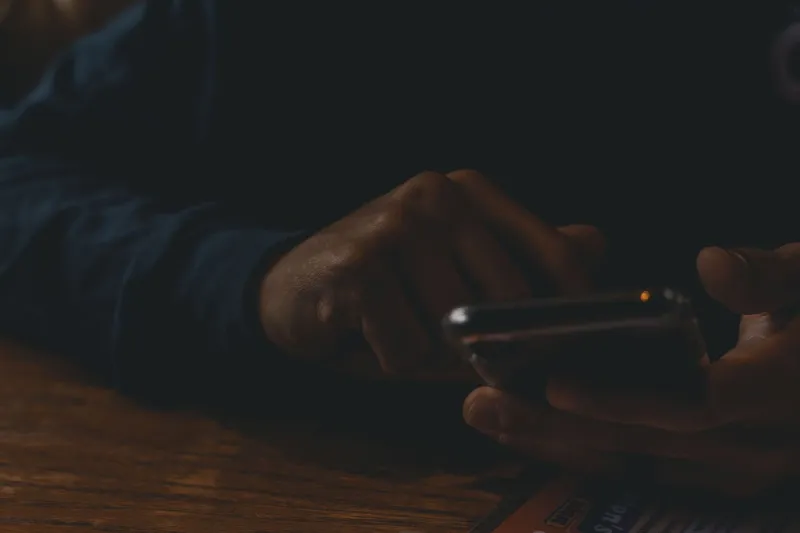
There's a version of you that exists only in the negative space of your digital life. It lives in the half-typed text message you backspaced into nothing at 2 a.m. It haunts the Google search you deleted before hitting Enter — the one you're not going to describe here, and don't have to. It flickers inside the tweet draft you composed with real conviction and then quietly let expire, unposted, somewhere in a server farm you'll never visit.
That version of you? It's arguably the most honest one.
The Draft as Confession Booth
Most of us treat the delete key like an eraser. We assume that what we remove from the screen disappears from the record — that intention without action leaves no trace. But digital systems don't really work that way, and neither does psychology.
Platforms like Twitter (now X) have long stored draft data even when users believed they were discarding it. Meta's infrastructure logs keystrokes in ways that users consented to — technically — somewhere in the fog of a terms-of-service agreement nobody read. Google's autofill is trained, in part, on the hesitant, the half-formed, the almost-asked. The infrastructure of the modern internet is built around capturing not just what you do, but what you almost did.
But the more interesting question isn't what the platforms know. It's what those almost-actions reveal about the gap between the self you perform online and the self you actually are.
Psychologists call this the "intention-behavior gap" — the measurable, consistent distance between what people plan to do and what they actually follow through on. In analog life, that gap is relatively invisible. In digital life, it leaves artifacts.
What the Unsent Message Actually Is
Think about the last time you drafted a text and deleted it. Maybe it was to an ex. Maybe it was a confrontation with a coworker you ultimately decided wasn't worth having. Maybe it was a confession of some kind — affection, frustration, a correction you wanted to make but didn't want to be the person making.
The draft itself is a negotiation. You're not just composing words — you're running a simulation of how the other person receives them, what version of you gets reflected back, what the social cost might be. Most of the time, the draft loses that negotiation. You decide the risk isn't worth it, or the moment has passed, or you've talked yourself out of the feeling.
But here's the thing: the feeling was real. The draft is evidence of something that existed, even if it never transmitted. In some ways, the unsent message is more emotionally precise than anything you actually send — it's the thought before the editing, the impulse before the strategy.
Researchers studying digital communication patterns have found that the frequency of unsent messages correlates with certain psychological traits: high self-monitoring, anxiety around social perception, and what some call "communicative perfectionism." People who draft and delete a lot aren't necessarily more indecisive — they're often more aware. They're running more scenarios. They're thinking harder about the downstream effects of their words. That's not nothing.
The Search You Immediately Erased
Deleted search history occupies a particularly strange corner of this phenomenon. The search bar is one of the few places where people still type in something close to raw, unfiltered thought. You don't perform for Google the way you perform for Instagram. You ask it things you wouldn't ask another person. You type symptoms you're scared to name out loud. You search for information about situations you haven't admitted you're in.
And then, sometimes, you delete it. Not because the information was useless — but because the act of having searched feels too revealing, even to yourself.
This is digital self-surveillance in its most intimate form. You're not hiding from an algorithm or a data broker (though you might be, unsuccessfully). You're hiding from the evidence of your own curiosity. The deletion is almost ritualistic — a way of saying this thought doesn't count, this doesn't define me, I was just looking.
Except it does count. The search happened. The thought was real enough to type.
Abandoned Social Media Drafts and the Performance We Refused to Give
Social media drafts are their own peculiar category. Unlike private messages or search queries, these are thoughts that were specifically intended for an audience — and then pulled back before the curtain went up.
Platforms have gotten increasingly good at surfacing these. Instagram will remind you that you have an unfinished caption. TikTok stores drafts by default, sometimes for months. LinkedIn — and this is deeply on-brand for LinkedIn — will occasionally prompt you to "finish" a post you started during some moment of professional vulnerability you've since thought better of.
The abandoned social draft is a performance that got cold feet. It's the version of you that wanted to be seen in a particular way, then reconsidered. Maybe the post felt too raw. Maybe you were venting and came back to it sober. Maybe you wrote something genuinely interesting and then convinced yourself it wasn't interesting enough, or that the wrong people would respond to it, or that you'd be misread.
Collectively, the drafts we never post might represent a more accurate map of who we actually are online — minus the optimization, minus the performance anxiety, minus the fear of the ratio. Just the thought, undeployed.
What Persists After the Delete
Here's where it gets genuinely strange: deletion isn't always what it claims to be. Beyond the platform-level data retention that most users vaguely know about and rarely think about, there's the question of what deletion does to memory — yours, not the machine's.
Psychological research on the "Zeigarnik effect" suggests that incomplete actions linger in working memory more persistently than completed ones. When you draft something and send it, the mental loop closes. When you draft something and delete it, the loop stays open. The thought doesn't fully resolve. It circles.
This might explain why people often feel haunted by their unsent messages in a way they don't feel haunted by the ones they actually sent. The sent message has a response — it exists in the world now, it has consequences, it's done. The deleted draft just sits there in your head, unresolved, occasionally resurfacing at inconvenient moments.
You deleted the draft. Your brain didn't get the memo.
The Archive You Never Meant to Keep
All of this adds up to something worth sitting with. Somewhere in the aggregate of everything you've almost said — every draft, every deleted search, every message you typed and then erased — there's a portrait of you that's more complete than your curated profiles, more honest than your highlight reel, more you than the version you've chosen to present.
The digital self you perform is a selection. The digital self you discard is what didn't make the cut — and that's where the real information lives.
None of this is to say you should send every draft. The filter is doing real work. Social life requires it. But it's worth acknowledging that the delete key isn't a reset button. It's a record of a choice — and choices, even the ones that go nowhere, tell you something true.
The signal didn't transmit. That doesn't mean it wasn't there.