Junk Mail Oracle: The Buried Warnings Your Spam Folder Knew Before Anyone Else
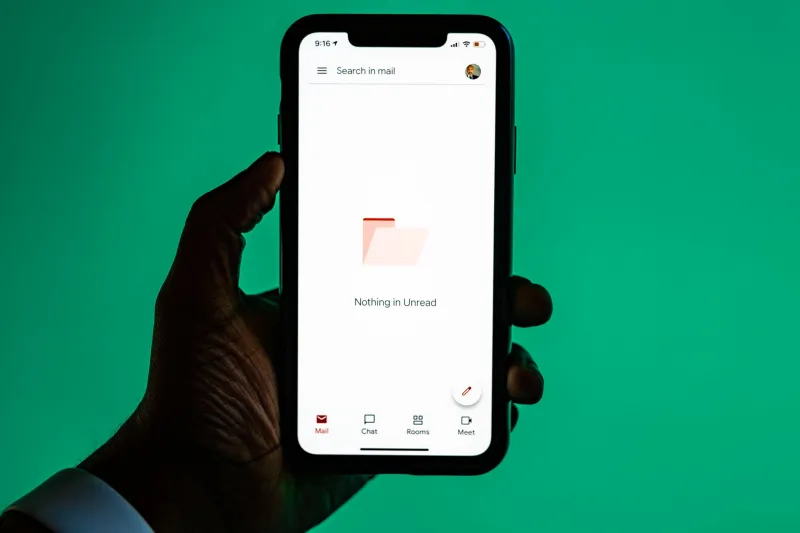
There's a folder on your email account you almost never open. It smells like digital rot — the accumulated residue of get-rich-quick schemes, phishing attempts, and newsletters you signed up for in 2011 and never unsubscribed from. But somewhere inside that graveyard of unwanted correspondence, researchers and archivists are starting to find something genuinely unsettling: messages that were right.
Not spam. Warnings. Predictions. Early dispatches from people who saw something coming and got algorithmically silenced for their trouble.
The Filter That Cried Wolf (And Then Didn't)
Spam filtering, at its core, is a pattern recognition game. Systems scan for linguistic fingerprints — urgency language, unusual sender behavior, unfamiliar domains, certain keyword clusters — and make a judgment call in milliseconds. The problem is that those same fingerprints appear in a lot of legitimate communication, especially when the sender is new, the topic is obscure, or the message is, frankly, hard to believe.
In the early 2000s, security researchers began noticing something uncomfortable. Emails flagging early vulnerabilities in widely-used software — messages sent by independent analysts to corporate IT departments — were getting eaten by enterprise spam filters because they contained phrases like "critical exploit" and "immediate action required." The language of genuine threat disclosure is, it turns out, almost indistinguishable from the language of a phishing scam.
The result? Real warnings about real vulnerabilities sat in junk folders while the vulnerabilities were actively exploited. By the time anyone dug them out, the damage was done.
Pattern Recognition Doesn't Know What It Doesn't Know
Here's where it gets philosophically weird. Spam filters are trained on historical data — they learn what "bad" looks like based on what humans have already labeled as bad. Which means they're inherently backward-looking. They're optimized to catch yesterday's threat, not tomorrow's.
And this creates a specific, reproducible failure mode: anything genuinely novel gets flagged as suspicious by default. New terminology. Unfamiliar sender domains. Unusual topic combinations. The more original and prescient a message is, the more likely it is to trip the filter.
In 2009, a small environmental monitoring group in the Pacific Northwest was sending alerts about unusual atmospheric readings to government agencies and local municipalities. The emails never arrived. Spam filters at multiple agencies flagged them — the domain was new, the language was technical and urgent, and the claims were, at the time, considered fringe. Those readings, researchers later confirmed, were early indicators of conditions that became significant policy concerns within five years.
Nobody read the emails until someone went looking specifically for what had been missed.
The Junk Folder as Unintentional Archive
What's strange — and this is where Glitchfield territory really begins — is that spam folders don't immediately delete things. Most major email providers hold junk mail for 30 days. Enterprise systems sometimes hold it longer. And some of those messages, against all odds, survive.
Digital archivists have started treating recovered spam folders from defunct organizations and decommissioned servers as legitimate historical artifacts. The Internet Archive has quietly been involved in conversations about preserving certain categories of filtered correspondence. Because what lives in those folders isn't just noise — it's a record of what the dominant systems of any given moment decided not to hear.
There's a researcher in Chicago — she asked not to be named, which feels appropriate — who has spent three years cataloging recovered filtered correspondence from early social media companies. What she's found is a pattern of early warnings about platform radicalization, harassment infrastructure, and algorithmic amplification that were flagged as spam when sent by academics and advocates to company inboxes between 2010 and 2014. The language in those emails reads, she says, like a precise description of problems that wouldn't become mainstream news until 2017 or 2018.
"The filter decided these people were spammers," she told a small conference last year. "Mostly because they were saying things nobody was ready to believe yet."
The Credibility Trap
There's a brutal irony at the center of this phenomenon. Spam filters don't just evaluate content — they evaluate credibility signals. Sender reputation. Domain age. Authentication headers. Whether the sender has corresponded with the recipient before.
Which means new voices, outsider researchers, and people operating outside established institutions are disproportionately filtered out. The system rewards existing relationships and penalizes novelty. In practice, this means the people most likely to see something coming — precisely because they're not embedded in the consensus — are also the people most likely to get silenced by automated gatekeeping.
It's not a conspiracy. It's worse than a conspiracy. It's a structural incentive that systematically disadvantages unconventional thinking, and it operates at the speed of machine learning with essentially no human review.
Reading the Glitch Backward
What do you do with this information? That's genuinely unclear, and anyone claiming otherwise is probably overselling it.
Some security researchers have started building what they call "second-pass review" systems — tools that re-examine filtered correspondence using updated context, essentially asking: "If we received this message today, knowing what we know now, would we still call it spam?" The results, in pilot programs at a handful of tech companies, have been quietly alarming. Enough to keep the pilots running, anyway.
There's also a growing argument — still pretty niche, still mostly confined to academic corners of the internet — that spam filter logs should be treated as a kind of institutional memory. That before a company or agency deletes its junk folder archives, someone should at least look. Not for legal liability. Not for competitive intelligence. Just because the things we collectively decided not to hear have a habit of coming back around.
The web has always had a trash problem — not just the garbage that floods inboxes, but the real signal that gets swept up with it. Glitches in the sorting mechanism. Errors in the judgment call. The oracle that got filed under "promotions."
What's Still Sitting There
Right now, somewhere in a spam folder — yours, a government agency's, a hospital's, a tech company's — there is almost certainly a message that is correct about something we don't believe yet. The filter flagged it because it sounded too urgent, or came from a domain nobody recognized, or used language that pattern-matched to something malicious.
In five years, maybe ten, someone will go looking for the early warnings. They'll find the sent receipts, the undeliverable notifications, the junk folder timestamps. And they'll have that very specific, very modern experience of realizing that the information existed, that it was transmitted, and that a machine decided — in under a millisecond, with total confidence — that nobody needed to hear it.
The signal was there. We just built a very efficient system for making sure it never arrived.