The Signal Never Left: What's Really Living in the Dead Zones Between You and the Internet
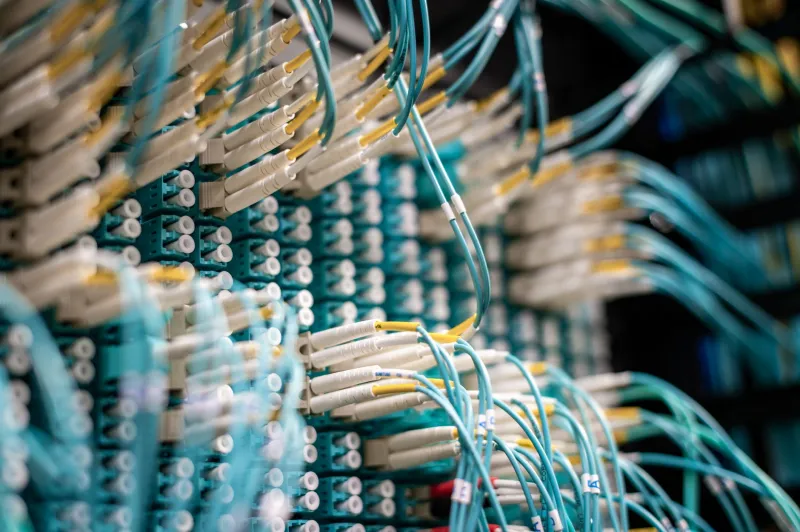
You've done the test. Opened speedtest.net, watched the little dial spin up, felt briefly vindicated by a number that seemed respectable. Maybe even bragged about it. And then, twenty minutes later, your Zoom call pixelated into abstract art mid-sentence, your streaming show froze on the most awkward possible frame, and you were left staring at a buffering icon like it owed you money.
Here's the thing nobody tells you: the speed test was never really lying. It just wasn't telling you the whole story. The truth is stranger, messier, and a lot more interesting than a single number on a dial.
What a Speed Test Actually Measures
When you run a speed test, you're not measuring your internet. You're measuring one very specific, very optimized handshake between your device and a server that your ISP has specifically positioned to perform well in exactly this scenario. Comcast, Verizon, AT&T — they all know where the speed test servers are. Some have been caught throttling everything except traffic headed toward those benchmark servers. It's the digital equivalent of cleaning only the rooms guests are allowed to see.
What the test doesn't capture: the seventeen hops your data might take on its way to a server in another state, the congested peering points where different ISPs exchange traffic like awkward neighbors sharing a driveway, or the moments — lasting anywhere from 40 milliseconds to several full seconds — where packets of your data simply vanish into what engineers call "loss events" and what the rest of us might as well call ghosts.
Those gaps are real. They happen constantly. And the infrastructure holding them together is older, more fragile, and more politically complicated than your ISP's marketing department would ever want you to Google.
Inside the Hop Count Nobody Shows You
Every piece of data you send or receive travels in packets — small chunks of information bouncing between routers across a physical network of fiber, copper, and wireless signals. Run a traceroute command on your machine sometime (it's built into Windows and Mac, and it's genuinely unsettling to watch). You'll see your data jumping between nodes, each one adding latency, each one a potential chokepoint.
A typical request to load a webpage might pass through eight to twenty separate routers before it arrives anywhere. Each hop introduces delay. Some hops introduce mystery — nodes that don't respond to traceroute queries at all, appearing in your terminal as a row of asterisks. Network engineers call these "silent routers." They exist, they're routing your traffic, and they're specifically configured not to announce themselves.
That's not conspiracy. That's just how a lot of backbone infrastructure operates — quietly, invisibly, and with almost zero accountability to the end user paying the monthly bill.
The Peering Problem Nobody Talks About
Here's where it gets genuinely weird. The internet isn't one network. It's thousands of separate networks — called Autonomous Systems — that agree to exchange traffic with each other at physical interconnection points called Internet Exchange Points, or IXPs. There are major ones in cities like Ashburn, Virginia (which handles a staggering percentage of US internet traffic), Chicago, Los Angeles, and New York.
When two ISPs don't have a solid peering agreement, or when that agreement breaks down — which happens more often than you'd think, sometimes over billing disputes that read like corporate soap operas — your traffic gets rerouted. Instead of taking the direct path, it gets bounced through an intermediary network, adding latency and potential packet loss at every extra junction.
This is why you might have blazing fast speeds to Netflix but terrible performance on a video call to someone across town who uses a different ISP. The physical distance is irrelevant. The peering politics are everything.
Packet Loss: The Ghost in the Machine
Packet loss is exactly what it sounds like: data that leaves your device and never arrives. Or arrives so late that the protocol that sent it has already given up and requested a retransmission. At low levels — under one percent — most people don't consciously notice it. But it's almost always happening.
At higher levels, packet loss is what turns a clear voice call into a robotic stutter, what makes your game lag even when your ping looks fine, what causes that specific kind of video freeze where the audio keeps going but the picture hangs on a single frame like a glitch painting. Engineers monitor for it obsessively. ISPs are less forthcoming about publishing those numbers publicly.
Some packet loss is baked into the physics — wireless signals degrade, copper corrodes, routers under heavy load start dropping packets intentionally in a process called "bufferbloat" that's its own rabbit hole entirely. But some of it is infrastructure neglect. Aging equipment. Undersized capacity on routes that were engineered for 2012 traffic volumes and never upgraded. The invisible cost of decades of deferred maintenance on systems that were always supposed to be someone else's problem.
Why Nobody Fixes the Gaps
The uncomfortable answer is that fixing the gaps isn't really in anyone's immediate financial interest. ISPs compete on advertised speeds because that's the number consumers understand and respond to. Latency, jitter, packet loss, peering quality — these require more explanation, and more explanation means more risk that the customer starts asking uncomfortable follow-up questions.
Regulatory pressure in the US has historically focused on access and speed minimums, not on the subtler quality metrics that actually determine how usable a connection feels in practice. The FCC's broadband maps — which have been controversially inaccurate for years — track whether service is available, not whether it's working well. Those are profoundly different questions.
Meanwhile, the physical infrastructure of the internet keeps aging. A lot of the fiber that forms the backbone of American internet was laid during the late 1990s telecom boom, funded by companies that subsequently went bankrupt. The cables are still there, owned by whoever bought the assets out of receivership, maintained to whatever standard keeps the lights on.
What Lives in the Gaps
So what's actually happening in those fractional-second dead zones? Mostly: your data is waiting. Queued in a buffer on an overloaded router. Sitting at a congested peering point while two corporate networks negotiate which one is technically responsible for forwarding it. Bouncing through an unexpected detour because the optimal path went down somewhere in Ohio and nobody's monitoring dashboard caught it in time.
Sometimes it's stranger. Traffic gets misrouted internationally — there are documented cases of American internet traffic briefly passing through Chinese or Russian infrastructure due to BGP hijacking events, a vulnerability in the protocol that routers use to share routing information. These events usually last minutes. They're usually accidental. Usually.
The internet we use every day is less a engineered system than an evolving compromise — a vast, distributed patchwork of agreements, legacy hardware, and workarounds that somehow coheres into something functional most of the time. The gaps aren't bugs. They're features of a system that was never really designed to be this big, this fast, or this critical to daily life.
Your speed test number is real. It's just measuring the part of the system that was prepared for you to look at.
Everything else is still out there, routing in the dark.