Finishing Your Thoughts: The Creeping Intelligence Behind Predictive Text
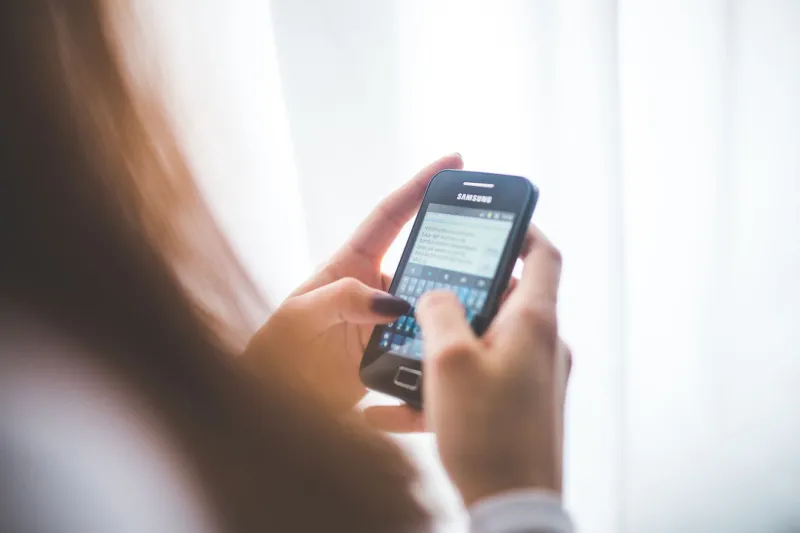
Something strange happens when you're mid-text and the gray suggestion bar above your keyboard offers the exact word you were reaching for — the one you hadn't consciously chosen yet. You tap it automatically. The sentence closes. And somewhere in the back of your skull, a small alarm goes off.
It's not that your phone was wrong. That's the whole problem. It was completely, uncomfortably right.
This is the uncanny valley of autocomplete. Not the robotic kind where your phone spits out "I am on my way" like a hostage note. The other kind. The kind that makes you set your phone down for a second and just stare at the ceiling.
The Engine Under the Guesswork
Predictive text didn't start out creepy. Early versions were essentially autocorrect with ambitions — statistical models that looked at what letters you'd typed and made a frequency-based bet about what word you probably wanted. It was blunt, often wrong, and occasionally hilarious in the ways it failed.
What's running on your phone now is categorically different. Modern predictive keyboards — whether that's Gboard, Apple's QuickType, or third-party options like SwiftKey — use neural language models trained on enormous datasets of human writing. We're talking billions of sentences scraped from the web, books, forums, social posts. The model learns not just which words follow other words, but the underlying structure of how people express things in context.
Then it gets personalized. Every message you send, every correction you accept or override, every weird phrasing you use when texting your best friend versus your landlord — the keyboard absorbs it. A local model builds on your device, layered over the general one. Over months and years, it starts to sound like you. Sometimes more like you than you'd prefer.
The Moment It Stops Feeling Like a Tool
There's a specific psychological threshold where helpful tips into something harder to name. Psychologists who study human-computer interaction sometimes call it parasocial cognition — the tendency for our brains to assign intent or understanding to systems that have neither. We're wired to read minds. When something behaves as if it's reading ours, the brain treats it like it actually is.
Predictive text is a near-perfect trigger for this. It doesn't just guess the next word. It guesses the emotional register of what you're writing. If you've been texting in short, clipped sentences all morning, the suggestions shift to match. If you're clearly composing something apologetic, the model surfaces softer phrasing. It's not understanding you. But it's modeling you. The difference, in the moment, can be almost impossible to feel.
And that's before you factor in the genuinely strange cases — the ones people share online with a mix of amusement and unease. Suggestions that reference conversations you had days ago. Phrases that seem to anticipate news you hadn't typed yet. Your phone offering a contact's name before you've thought to reach out. These aren't glitches. They're the system doing exactly what it was built to do. Which, somehow, makes them weirder.
Your Language Is a Dataset Now
Here's the part worth sitting with: the model that finishes your sentences was trained on writing that wasn't yours, then fine-tuned on writing that was. It doesn't understand meaning. It predicts token sequences — essentially, it's learned that certain patterns of words follow other patterns of words with high probability given context. But because language is thought, at least partially, predicting language and predicting thought start to converge.
When Gboard's on-device model suggests the exact phrase you were building toward, it's not reading your mind. It's reading the statistical ghost of everyone who ever wrote something similar, filtered through the specific way you've been writing for the past two years. You're in there. So is everyone else.
This is what makes the experience feel like looking in a mirror that's slightly off. The reflection is yours, but it was assembled from pieces.
Apple has been loudest about keeping predictive learning on-device, which limits what gets shared with external servers. Google's approach involves more cloud processing, though they've added differential privacy layers to reduce individual exposure. Neither company is especially eager to detail exactly what behavioral signals feed the personalization loop. That opacity is doing a lot of work.
When the Glitch Is the Feature
The moments where predictive text breaks are actually instructive. Type something emotionally raw — something you're genuinely struggling to articulate — and the suggestions often go flat and generic. "I just feel like" → everything is fine. The system reaches for the statistical average, which has never been through what you're going through right now.
That failure is revealing. The model is excellent at predicting common language. It's bad at predicting your language when you're somewhere most people don't write from. The uncanny accuracy you feel in ordinary conversation is real. But it's a reflection of how much of ordinary conversation is already predictable — how much of what we say to each other runs in familiar grooves.
Which raises a question worth chewing on: when your phone finishes your sentence and you tap to accept it, who wrote that sentence? You started it. A language model, trained on millions of people including you, closed it. The meaning was yours. The words were a collaboration.
This is happening hundreds of times a day for most people who own smartphones. It's normalized to the point of invisibility. That's probably fine. But every so often, the suggestion bar offers something a little too precise, a little too you, and the whole invisible arrangement surfaces for a second.
Your phone doesn't know what you're thinking. It just knows what people like you tend to say next. The fact that those two things feel so similar is less a statement about the technology and more a statement about us.
The Discomfort Is the Signal
That flicker of unease you get when autocomplete nails it? Don't dismiss it. It's not paranoia and it's not technophobia. It's your brain correctly identifying that something is happening here — that the relationship between you and your devices has become genuinely strange in ways that haven't been fully named yet.
Predictive text isn't reading your mind. But it is, in a very literal sense, modeling it. Building a probabilistic map of how you communicate. Updating it constantly. Using it to stay one word ahead of wherever you're going.
That's useful. That's also, depending on the moment, a little much.
Next time the keyboard finishes your thought before you do, notice it. Not with alarm — just notice. There's something happening in that gap between what you meant to say and what the machine offered up. Something that sits right at the edge of the Glitchfield, where the signal and the noise stop being easy to tell apart.