Your Phone Knows What You Meant: The Quiet Intelligence Living Between Your Keystrokes
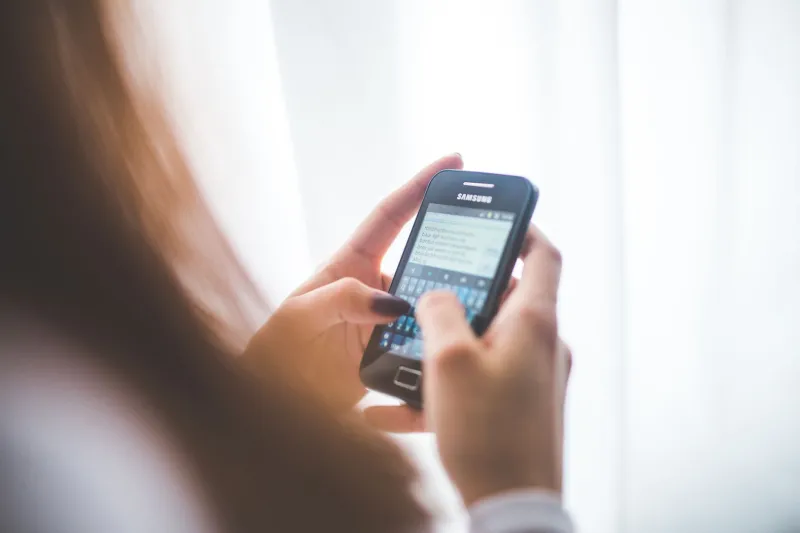
There's a specific kind of creep that happens when you're mid-text and your phone suggests the exact word you were reaching for — not just a close guess, but the word, the one that was forming somewhere in the back of your skull before your fingers even started moving. You tap it. You move on. But something small and strange just happened, and most of us have trained ourselves not to look directly at it.
Predictive text has been around long enough that we treat it like plumbing — invisible infrastructure that's just supposed to work. But somewhere in the last few years, it stopped just correcting your typos and started doing something harder to name. It started anticipating you. And that shift, quiet as it was, opens up a set of questions that linguists, UX designers, and cognitive scientists are still arguing about in ways that rarely make it into mainstream tech coverage.
From T9 to Mind-Reading: A Brief History of Machines That Finish Your Thoughts
If you were texting on a flip phone in 2003, you remember T9 — the dictionary-based system that let you punch a number key once per letter and trust the algorithm to figure out which word you meant. It was clever. It was also deeply limited. T9 worked from a fixed vocabulary and a simple frequency model. It had no memory. Every text started from zero.
What lives in your phone today is something categorically different. Modern predictive keyboards — the engines under Gboard, Apple's QuickType, SwiftKey — are trained on billions of words of human-generated text and then fine-tuned on your specific usage patterns. They track which words you use together, what you type after certain phrases, how your vocabulary shifts depending on who you're talking to. They are, in a very real sense, building a model of your mind.
"The system isn't just learning your vocabulary," says one computational linguist who studies human-computer interaction. "It's learning your associations. The way you link ideas. The transitions you make between topics. That's not autocomplete anymore — that's something closer to a behavioral profile expressed through language."
The Uncanny Valley Has a Keyboard Now
Most people are familiar with the uncanny valley as a visual phenomenon — the point where a computer-generated face becomes realistic enough to trigger discomfort rather than recognition. But there's a linguistic version of that valley, and predictive text has started living in it.
When autocorrect gets it wrong, it's annoying. When it gets it right — genuinely, specifically, almost spookily right — something else happens. A small cognitive alarm goes off. You feel seen in a way you didn't consent to. UX researchers have a name for this sensation in broader AI contexts: algorithmic intimacy. The system knows something about you that you didn't explicitly share, and the knowledge arrived through inference rather than disclosure.
The philosopher's version of this problem is older than smartphones. There's a long tradition of debate around what it means for something external to know your intentions — whether that constitutes a violation, a convenience, or something that doesn't fit neatly into either category. Your phone's keyboard has wandered into that debate without anyone sending out invitations.
What Your Suggestions Say About You
Here's where it gets genuinely interesting. Because predictive text isn't just a mirror of your vocabulary — it's a mirror of your habits, your anxieties, your social patterns. Researchers have found that the suggestion bar on a smartphone keyboard can surface things about a user that the user hasn't consciously acknowledged.
In studies where participants were asked to follow their predictive suggestions for several sentences without editing, the resulting text frequently revealed emotional preoccupations, recurring worries, and relationship dynamics that the participants recognized as accurate but hadn't intended to express. The algorithm wasn't reading minds. It was reading the sediment — the residue of everything you'd typed before, compressed into a probability distribution.
There's something both banal and quietly profound about that. Your phone's suggestions are, in a literal sense, a statistical portrait of your inner life as expressed through language. Not a deep or complete portrait. But a real one.
"People are surprised when I tell them that the suggestion bar is actually one of the richest datasets we have for studying someone's mental state over time," notes a UX researcher who works on conversational AI. "It's not dramatic. It's not surveillance in the way people imagine surveillance. But it's continuous, and it's intimate in ways that are easy to underestimate."
The Bias Hidden in the Autocomplete
Predictive text doesn't just reflect your individual habits — it also carries the weight of the training data it was built on. And that data, inevitably, encodes the biases of whoever generated it.
For years, researchers documented cases where predictive keyboards reinforced racial stereotypes, gendered assumptions, and culturally specific defaults that felt neutral to some users and alienating to others. Type a woman's name followed by "she is" and see what the algorithm reaches for. Type a man's name in the same construction. The suggestions aren't random. They're weighted by patterns in the text the model was trained on, and those patterns reflect a world that is not, and has never been, neutral.
This is the part of predictive text that rarely comes up in product announcements. The system that finishes your sentences is also, subtly and continuously, nudging them in directions shaped by whoever built it and whatever data they used. You're not just getting help typing. You're being influenced, at the level of individual word choices, by a model you never agreed to and probably can't fully inspect.
When the Glitch Is the Feature
Glitchfield readers know this particular flavor of friction well — the moment when a system meant to smooth things over instead reveals something true by breaking the wrong way. Autocorrect fails are a comedy genre at this point, a whole ecosystem of screenshots built on machines confidently producing the wrong word. But the failures are instructive precisely because they show you the shape of what the system was trying to do.
Every autocorrect disaster is a window into the probability model underneath — a moment where the statistical reasoning became visible because it went sideways. The system thought this word was more likely than that one, and it was wrong, and now you can see the seams. That's not a bug in any deep sense. It's the algorithm being honest about what it actually is: a very sophisticated guesser working from incomplete information about a genuinely complex thing.
Which is, when you think about it, not entirely unlike what humans do when they try to understand each other.
The Sentence You Didn't Write
The real philosophical weight of predictive text isn't in the successes or the failures. It's in the moment of decision — the split second where you see the suggestion and choose whether to take it. Because in that moment, you're not just accepting a word. You're deciding whether the machine's model of you is accurate enough to trust.
Sometimes you tap the suggestion because it's exactly right. Sometimes you ignore it because it's close but not quite. And sometimes — if you're paying attention — you pause, because the word it offered was one you were genuinely about to type, and you're not sure what it means that it knew.
That pause is the interesting part. That's the signal breaking. And something worth paying attention to begins.