Still Online: The Faithful Keeping Abandoned Corners of the Web From Going Dark
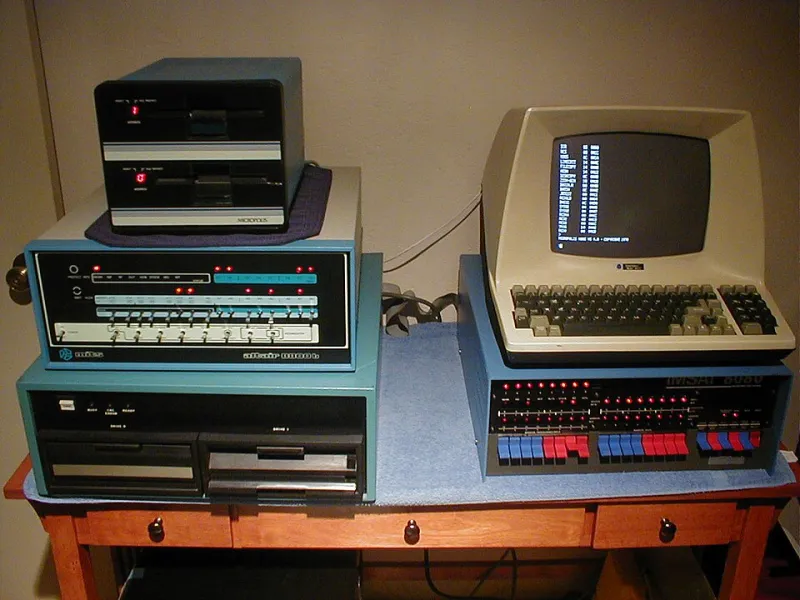
Photo: John crane 59, CC BY-SA 3.0, via Wikimedia Commons
The last post on the Retrofuturism Lounge forum was timestamped March 14, 2018. It was a reply to a thread about the aesthetics of 1970s science fiction concept art. The reply got two upvotes. No one responded. The thread just sat there, open, like a door left ajar in an empty house.
That was six years ago. The forum is still there. People still visit.
The Internet Has a Lot of Empty Rooms
We talk about the internet like it's a living thing — always growing, always changing, always generating the next thing. And mostly that's true. But underneath the algorithmic churn of social media feeds and recommendation engines, there's another internet. Slower. Quieter. Full of spaces that by every reasonable metric should have gone dark, but haven't.
Abandoned forums. Defunct social networks. Fan sites built on GeoCities-era HTML that somehow never got taken down. Online communities that peaked in 2009 and technically ended sometime around 2015, but where a handful of people still log in, still post, still maintain the place like caretakers of a building everyone else forgot existed.
These aren't just digital ruins. They're something harder to categorize — part time capsule, part ongoing ritual, part refusal to let go of something that mattered.
Who Keeps Showing Up?
Take Dreamwidth, the blogging and journaling platform that spun off from LiveJournal in 2008 and has been, by mainstream internet standards, basically invisible for over a decade. It still has active users. Not millions — but real, committed people who post regularly, maintain communities, and treat the platform with a kind of protective affection.
Talk to those users and a pattern emerges pretty quickly. They're not there because they think Dreamwidth is going to become the next big thing. They're there because it isn't the next big thing. The slowness is the feature. The small audience is the feature. The fact that nobody outside their circle knows or cares what they're posting is, for many of them, the entire point.
"It feels like a room that belongs to me," one longtime user wrote in a post about why she still uses the platform. "Twitter always felt like performing in a stadium. This feels like writing in a journal that a few friends can read if they want to."
That distinction — between performing and just existing online — comes up constantly in these communities. The abandoned spaces, paradoxically, offer something the crowded platforms don't: the freedom to be boring, to be slow, to be yourself without the anxiety of visibility.
The Ghost Admins
Then there are the people keeping the lights on in a more literal sense — the administrators, moderators, and solo maintainers who've taken on the unglamorous work of keeping defunct spaces technically functional.
Some of them inherited the role. A forum admin disappears, someone else steps up, and years later they're still running database backups and renewing domain registrations for a community that peaked before they even joined it. Others sought the role out deliberately, driven by something between archival instinct and genuine attachment.
One moderator of a now-dormant gaming forum — a space built around a multiplayer game that shut down its servers in 2016 — described his role in an interview posted to a gaming preservation subreddit: "The game is gone. The company is gone. But the conversations we had about it, the strategies, the drama, the friendships — that's all still there in the threads. If I let the forum go down, all of that disappears. I can't do that to the people who were part of it."
He gets maybe a dozen unique visitors a month. He's been doing this for seven years.
What Makes a Dead Space Still Feel Alive
There's a concept in architecture called a ruin's patina — the quality that comes from age and use and weather that makes an old building feel more real, more present, than a new one. Old forums have something similar. The accumulated weight of thousands of conversations, the inside jokes embedded in thread titles, the way you can scroll back through years of posts and watch people's writing styles evolve and their lives change — it creates a texture that no new platform can manufacture.
Social media companies spend enormous resources trying to generate this feeling artificially. Spotify shows you your listening history from three years ago. Facebook surfaces memories from a decade back. Instagram lets you archive old posts into a private vault. They're all, in their own way, trying to replicate what these abandoned spaces have naturally: the sense of accumulated time.
But there's a difference between a platform surfacing your past to keep you engaged and a space where the past is simply present, sitting there, unchanged, available to anyone who wanders in. The old forum doesn't need to remind you of what happened. It just shows you.
The Preservation Question
Not everyone who visits these spaces is a longtime community member. A growing contingent of digital preservationists — some affiliated with organizations like the Internet Archive, others working independently — treat abandoned web spaces as cultural artifacts worth documenting and protecting.
The argument is straightforward: the internet is history now. The conversations that happened on early social networks, the fan communities that formed around now-canceled TV shows, the political discussions on forums that no longer exist — these are primary sources. Letting them disappear is the equivalent of burning letters.
The challenge is that preservation and community don't always want the same things. Preservationists want to freeze a space in amber. Communities, even tiny ones, want to keep living in it — which means it keeps changing, keeps accumulating new posts, keeps drifting from whatever it was at its peak. The ghost admin renewing the domain every year isn't preserving a museum piece. He's tending something that's still, in some small way, alive.
Why We Keep Going Back
Maybe the simplest explanation is also the truest one: some places just matter to people, and the fact that a company shut down or a platform lost its userbase doesn't automatically make them stop mattering.
The internet has always been better at creating spaces than it has been at keeping them. Platforms rise, get acquired, pivot, die. The communities they housed scatter. But some of those communities don't fully scatter. Some of them find the old address still works and keep showing up anyway.
There's something quietly radical about that. In a digital landscape that runs almost entirely on growth metrics and engagement data, choosing to gather in a space that will never trend, never get acquired, never generate revenue — just because it's yours and it's still there — is a small act of defiance against the logic of the whole system.
The signal broke a long time ago in these places. But the people inside them found something in the static worth staying for.