When the Machine Got Lucky: Algorithm Misfires That Somehow Saw Tomorrow Coming

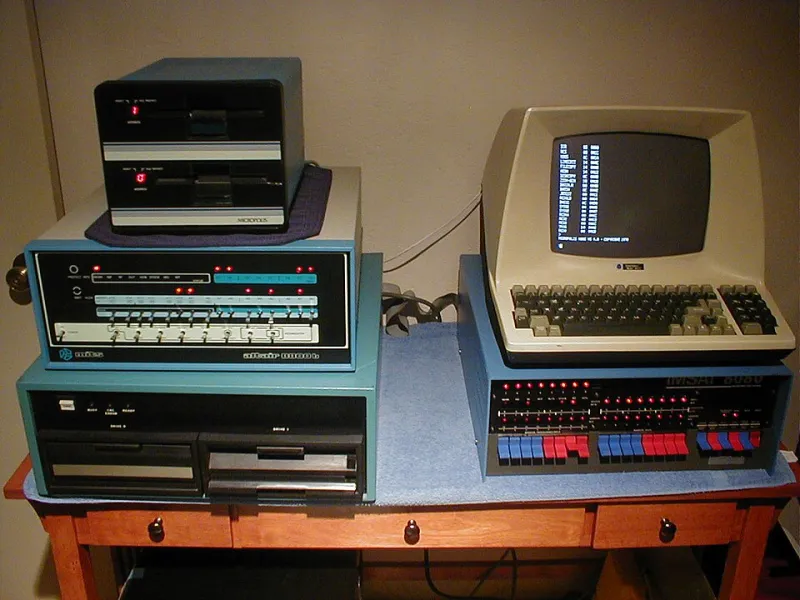
Photo: Cameron Butler, Public domain, via Wikimedia Commons
There's a line engineers like to repeat: garbage in, garbage out. Feed a system bad data, get bad results. Clean, simple, reassuring. Except sometimes the garbage comes out the other side looking like a prophecy — and nobody can quite explain why.
This isn't a story about artificial intelligence becoming sentient. It's weirder than that. It's about the moments when broken systems, misfiring code, and corrupted pipelines produced outputs so eerily accurate that researchers, traders, and developers are still arguing about whether coincidence is even a satisfying answer anymore.
The Flash Crash That Wasn't Supposed to Make Sense
On May 6, 2010, the US stock market dropped nearly 1,000 points in about 36 minutes, then bounced back almost entirely. The event became known as the Flash Crash, and for years, the official explanation pointed to algorithmic trading gone haywire — feedback loops between automated systems creating a cascade nobody programmed and nobody wanted.
But buried in the post-crash analysis was something quieter and stranger. Several high-frequency trading algorithms, operating on corrupted market data feeds, had executed sell orders that, by pure accident of their malfunction, closely mirrored patterns that legitimate risk models had been trying — and failing — to build for years. The glitched systems weren't right in a way that made any procedural sense. They were right the way a broken clock is right twice a day, except the clock somehow knew which two times mattered.
Some quantitative analysts started asking an uncomfortable question: were the corrupted inputs actually stripping out the noise that human-designed models kept tripping over? The data was wrong. The logic was broken. The outcome was, briefly, more accurate than anything running correctly that afternoon.
Spotify's Haunted Playlist Engine
In early 2017, a software engineer writing on a now-defunct personal blog documented a bizarre behavior in Spotify's recommendation system. Due to what Spotify later confirmed was a caching error, a subset of users were receiving playlist suggestions generated from a scrambled version of their listening history — essentially, the algorithm was recommending music based on data that didn't accurately represent what those users had actually played.
The weird part? Multiple users reported that the glitched recommendations felt more aligned with what they wanted to discover than the normal engine's suggestions. One user described it as the algorithm "knowing my mood better when it was broken than when it was working." A small Reddit thread at the time tried to reverse-engineer what the corrupted recommendations had in common. The best theory anyone landed on: the error was accidentally sampling from broader behavioral clusters rather than the individual's own history, which removed a confirmation bias the standard system had baked in.
Spotify patched the bug. The thread is still there. People still argue about it.
Trend Forecasting's Accidental Oracle
Around 2019, a marketing analytics firm running a social listening tool discovered that a data ingestion error had caused their trend-detection model to weight engagement signals from six months in the future — not literally, but effectively. A misconfigured timestamp normalization script was pulling engagement data and misassigning dates, causing the system to treat future-dated cached data as current.
The result was a trend forecast report that, when checked against actual market behavior six months later, was accurate in ways that made the firm's data science team deeply uncomfortable. Cottagecore as an aesthetic wave. The resurgence of vinyl-adjacent nostalgia marketing. A specific cluster of micro-influencer content categories that would blow up in late 2019 and early 2020.
The firm never published a case study. They fixed the bug and moved on. But the people who saw those reports still talk about them.
Chaos Isn't Random — It's Just Unreadable
Here's where it gets philosophically slippery. Complexity theorists have a concept called edge of chaos — the zone between rigid order and total randomness where the most interesting and adaptive behaviors tend to emerge. Living systems, markets, ecosystems, social networks: they all seem to hover near this edge. Too much order and nothing new can happen. Too much chaos and nothing holds.
What if algorithm errors are, occasionally, accidentally navigating toward that edge? Not because the broken code is smart, but because the noise it introduces disrupts the over-fitted, over-confident assumptions baked into the original system — and what's left is something more sensitive to weak signals that the "correct" version was too rigid to detect.
This isn't mysticism. Researchers in fields from epidemiology to finance have documented how adding controlled noise to certain models can improve their predictive accuracy. Stochastic resonance is the technical term — the phenomenon where a system's ability to detect a signal is actually enhanced by the presence of a certain amount of background noise. The glitching algorithm might be doing accidentally what researchers spend years trying to engineer deliberately.
The Problem With Calling It Coincidence
Skeptics have the easy answer here: survivorship bias. For every algorithm error that produced an eerily accurate output, there are ten thousand that just produced garbage. We remember the hits. We forget the misses. The pattern isn't in the data; it's in our storytelling about the data.
That's probably true. Probably.
But the survivorship bias explanation gets a little harder to lean on when you look at cases like the Flash Crash analysis, where the accuracy wasn't just directionally right but structurally right — where the broken system's outputs mapped onto risk patterns that legitimate models had been unable to isolate. Or when the corrupted trend data wasn't just lucky on one variable but coherent across multiple unrelated categories.
Maybe coincidence is doing a lot of heavy lifting in those explanations. Or maybe we're pattern-matching on noise. Or maybe — and this is the uncomfortable maybe — the systems we build are so constrained by our own assumptions that the only way they occasionally see past those assumptions is by breaking.
What the Glitch Knows That We Don't
There's no clean conclusion here. No researcher has published a peer-reviewed paper arguing that algorithm errors are genuinely prophetic. The engineers who've encountered these cases mostly treat them as curiosities — interesting, documented, then patched and filed away.
But they don't forget them either.
At Glitchfield, we're drawn to exactly this kind of question — the places where the signal breaks and something unexpected leaks through. Not because we think the machines are magic. But because the moments when our systems fail often reveal more about how they work, and how we work, than the moments when everything runs clean.
The glitch doesn't lie. It just tells a truth we didn't ask for.