Undead Signal: The Underground Networks Keeping Cancelled Shows Alive Against All Odds
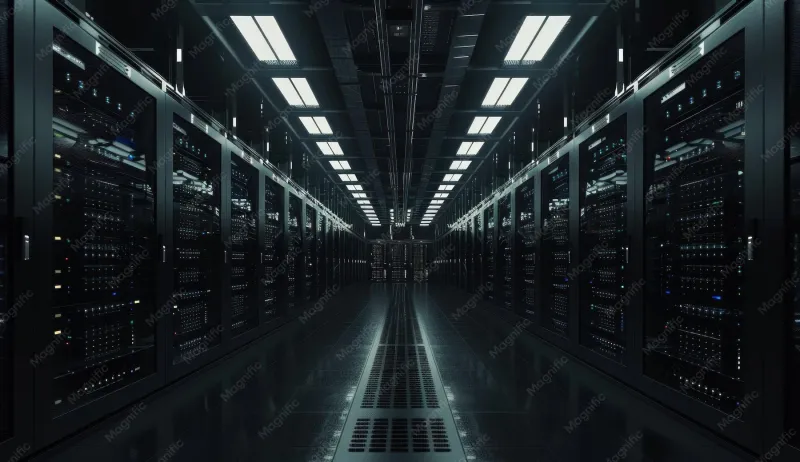
Photo: dark server room glowing screens underground archive, via img.freepik.com
Somewhere on a server nobody's supposed to know about, the entire run of a cult anime that was licensed, streamed for eight months, and then quietly delisted is playing right now. All forty-two episodes. Subtitled in six languages. Seeded by people who have never met each other and probably never will.
This is the part of the internet that doesn't get press releases.
Death by Licensing Deal
The mechanics of how a show disappears are almost mundanely corporate. A streaming platform loses its licensing agreement. A studio gets acquired and the new parent company decides the back catalog isn't worth maintaining. A niche anime never finds the mainstream audience the distributor gambled on. And then, with almost no fanfare, the thing just... vanishes. No download option. No physical release. No warning.
For casual viewers, that's an inconvenience. For the people who built communities around these titles — the ones who ran fan wikis, organized rewatch threads, wrote thousands of words of analysis — it feels like watching a building get demolished while everyone else shrugs.
"Studios treat these things like inventory," says one archivist who goes by the handle Ferrite online and has been preserving media for over a decade. "But to the people who actually watched them, they're more like places. And you don't just let a place get erased."
Ferrite is part of a loose, largely anonymous network of digital preservationists who have made it their project to ensure that cancelled and delisted media doesn't simply cease to exist. They operate across forums, private Discord servers, and decentralized platforms — maintaining archives of content that, in many cases, cannot be legally obtained anywhere on earth.
The Librarian Framing
Ask anyone in these communities how they think about what they do and you'll hear the same word over and over: librarians. It's not accidental. The framing does a lot of work.
Real librarians, the argument goes, preserve cultural artifacts regardless of whether the original creators want them preserved. The Library of Congress archives things that corporations would rather see forgotten. The Internet Archive has spent years fighting legal battles over exactly this question — and won some of them. The people running fan archives see themselves as operating in that same tradition, just without the institutional backing or the legal immunity.
The comparison has limits, obviously. A library doesn't host content it doesn't have rights to. But the philosophical core — that access to cultural history is a public good that shouldn't be contingent on whether a corporation finds it profitable to maintain — resonates beyond the people actively doing the archiving.
"There's a version of the 2000s internet that just doesn't exist anymore," says another archivist, who asked to be identified only as a "professional lurker." "Not just shows. Forum posts, fan sites, entire communities. The stuff that got archived survived. The stuff that didn't is just gone. That loss is real, even if nobody in a boardroom is counting it."
Decentralized and Deliberate
The infrastructure these communities use has evolved significantly over the past decade. Early fan archives were often single websites run by one person — easy to find, easy to take down with a DMCA notice. Modern preservation networks have learned from those takedowns.
Content gets distributed across peer-to-peer networks, mirrored on servers in jurisdictions with different IP enforcement norms, and documented in ways designed to survive the loss of any single node. Some communities use blockchain-adjacent tools to maintain indexes. Others rely on the sheer redundancy of having enough individual seeders that no single takedown can actually eliminate access.
It's not foolproof. High-profile targets still get pursued. But the architecture is deliberately resilient in ways that early fan sites weren't.
There's also a meaningful distinction these communities draw between archiving and piracy — one that doesn't always map onto legal reality but matters culturally. Actively distributed, commercially available content is generally outside the scope of what preservation-focused communities want to touch. The focus tends to be on content that is genuinely inaccessible: delisted, never released physically, or licensed in ways that make legal access impossible for most people.
"If you can buy it somewhere, we're not really interested," Ferrite says. "We're interested in the stuff that's about to stop existing."
The Legal Gray Zone Nobody Wants to Talk About
Let's be honest about what this is: most of what these archives contain is technically infringing. Copyright law in the US doesn't have a meaningful preservation exception for individuals, and the fair use analysis for hosting full episodes of a cancelled anime is not favorable.
The studios know these networks exist. Enforcement is inconsistent and often seems more theatrical than systematic — a takedown here, a cease-and-desist there, usually targeting the most visible operations rather than the underlying infrastructure. Some rights holders appear to have made a quiet calculation that aggressive enforcement against fan preservationists generates bad press and doesn't actually solve the underlying problem.
Others are more aggressive. And the people running these archives know they're operating at legal risk.
"I'm not going to pretend this is bulletproof," says one archivist. "I've had stuff taken down. I've gotten letters. But the alternative is that these things just don't exist anymore, and I can't make peace with that."
The broader question — whether the current copyright framework is actually serving the cultural preservation goals it's theoretically designed to support — is one that academics, librarians, and policy advocates have been arguing about for years without resolution. The fan archivists are just living in the gap that argument hasn't closed yet.
What Gets Saved and What Doesn't
Not everything makes it. The communities doing this work are finite, and their attention is selective. Shows with passionate, technically capable fanbases survive. Obscure content without that kind of community often doesn't. There's something uncomfortable about a preservation ecosystem that's essentially driven by fandom intensity — it means what gets remembered is partly a function of who cared loudly enough.
But the alternative — leaving preservation entirely to rights holders who have financial incentives to maintain only what's profitable — produces its own distortions. Entire genres, experimental formats, and niche cultural artifacts are disproportionately at risk of corporate erasure precisely because they never had mass audiences.
The signal breaks. Something new begins. And sometimes the only thing standing between a piece of culture and the void is a stranger on a server, running a torrent client, keeping the lights on for something they loved.
That's a weird and legally complicated way to run a library. But right now, it might be the only one we've got.